


Neural Directional Filtering - Far-Field Directivity Control with a Small Microphone Array
J. Wechsler, S. R. Chetupalli, M. M. Halimeh, O. Thiergart and E. A. P. Habets
Published in Proc. Intl. Workshop Acoust. Signal Enhancement (IWAENC), 2024.
*Best Student Paper Award - 2nd Place*
Abstract
Capturing audio signals with specific directivity patterns is essential in speech communication. This study presents a deep neural network (DNN)-based approach to directional filtering, alleviating the need for explicit signal models. More specifically, our proposed method uses a DNN to estimate a single-channel complex mask from the signals of a microphone array. This mask is then applied to a reference microphone to render a signal that exhibits a desired directivity pattern. We investigate the training dataset composition and its effect on the directivity realized by the DNN during inference. Using a relatively small DNN, the proposed method is found to approximate the desired directivity pattern closely. Additionally, it allows for the realization of higher-order directivity patterns using a small number of microphones, which is a difficult task for linear and parametric directional filtering.
Audio Examples
Below, we illustrate the performance with some audio examples. We show both the performance of our baseline methods (Least-Squares Beamforming [1], Parametric Filtering [2]) and that of our proposed method. The proposed method uses the FT-JNF architecture [4].
The examples constitute mixtures of 2 speakers from LibriSpeech [3] that we spatialized. The models trained on a single speaker as well as a maximum of {3,5} speakers are evaluated. For all audio examples, we first give the cardioid target and the corresponding estimates, then the 3rd-order DMA target and the corresponding estimates.
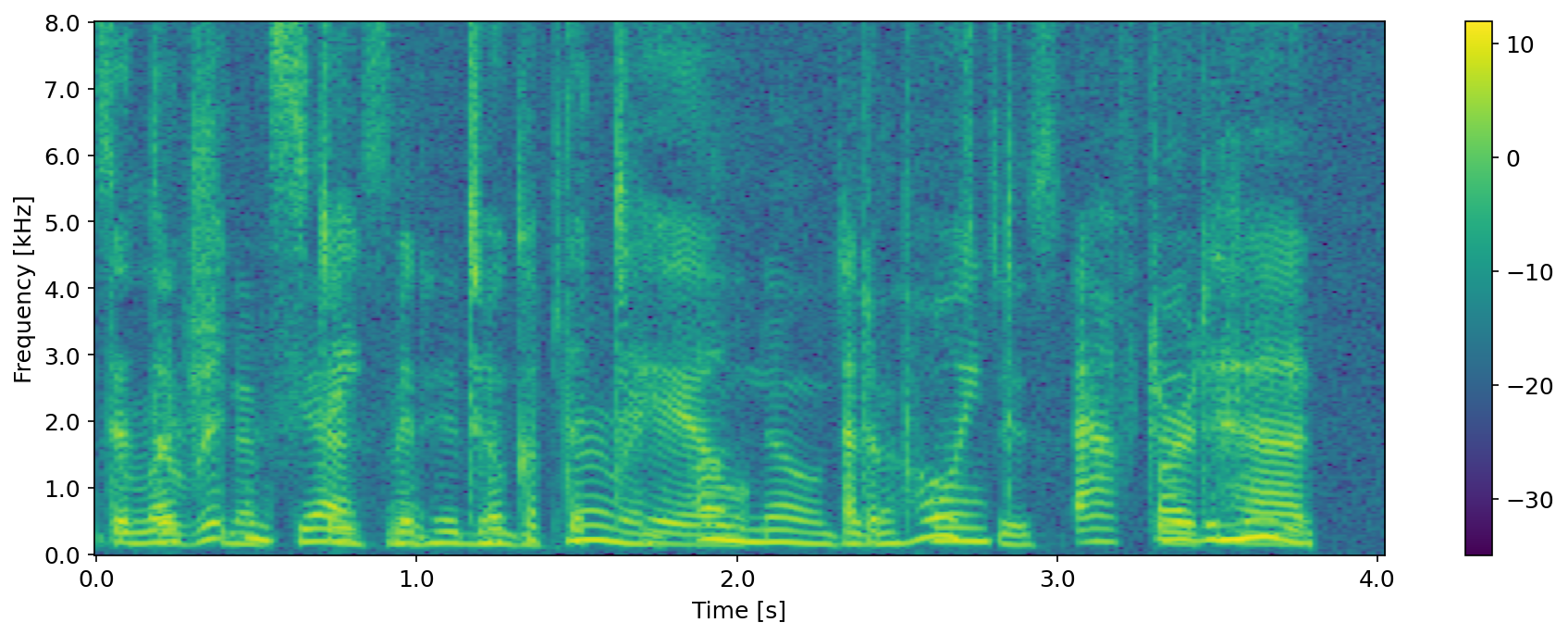
Sources at 2.5 and 87.5 degrees
The attenuation values are:
- Cardioid: -0.00 dB and -5.65 dB
- 3rd-Order DMA: -0.02 dB and -41.67 dB
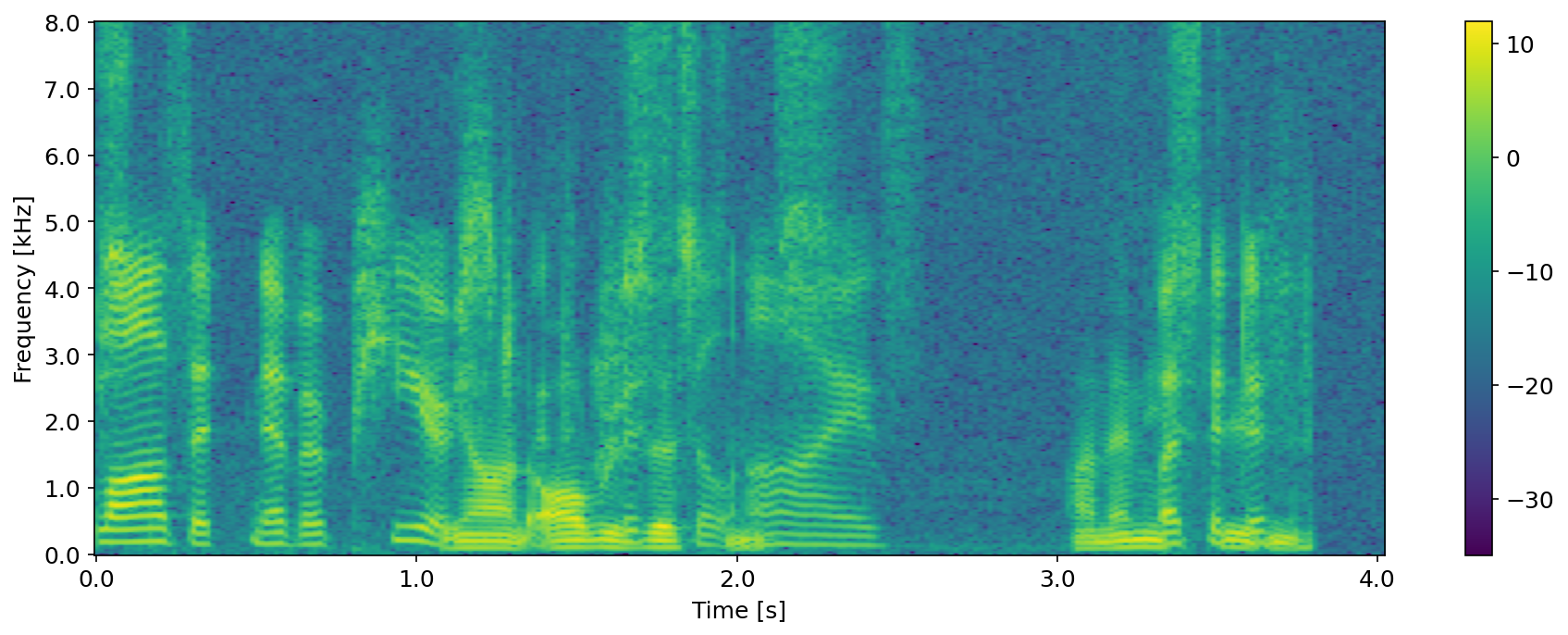
Sources at 177.5 and 187.5 degrees
The attenuation values are:
- Cardioid: -66.45 dB and -47.38 dB
- 3rd-Order DMA: -76.02 dB and -57.14 dB
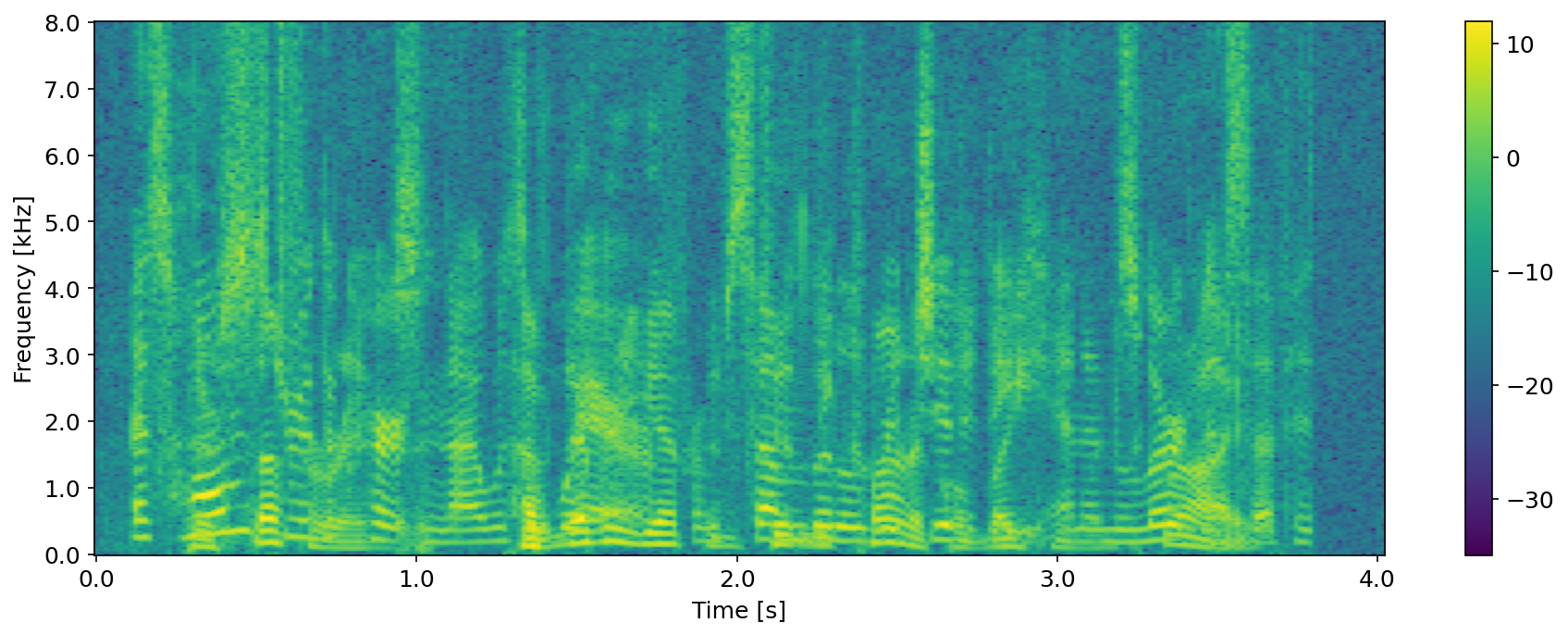
Sources at 92.5 and 182.5 degrees
The attenuation values are:
- Cardioid: -6.41 dB and -66.45 dB
- 3rd-Order DMA: -43.95 dB and -76.02 dB
References
[1] E. Rasumow et al., "Regularization Approaches for Synthesizing HRTF Directivity Patterns," IEEE/ACM Trans. Aud., Sp., Lang. Proc., vol. 24, no. 2, pp. 215-225, 2016.
[2] K. Kowalczyk, O. Thiergart, M. Taseska, G. Del Galdo, V. Pulkki and E. A. P. Habets, "Parametric Spatial Sound Processing: A flexible and efficient solution to sound scene acquisition, modification, and reproduction," in IEEE Signal Processing Magazine, vol. 32, no. 2, pp. 31-42, 2015.
[3] V. Panayotov, G. Chen, D. Povey and S. Khudanpur, “Librispeech: An ASR corpus based on public domain audio books,” in Proc. IEEE Intl. Conf. on Ac., Sp. and Sig. Proc. (ICASSP), 2015, pp. 5206-5210.
[4] K. Tesch and T. Gerkmann, “Spatially selective deep non-linear filters for speaker extraction,” in Proc. IEEE Intl. Conf. on Ac., Sp. and Sig. Proc. (ICASSP), 2023.